Where to see the stars in Spain
The places, with their coordinates. And the part almost nobody tells you: what you're allowed to do there once night falls.
Searching for “where to see the stars” and searching for “can I camp here” is the same question asked twice. Anyone who wants a dark sky is thinking of going out at night, far away, and probably of staying. Here are both answers together.
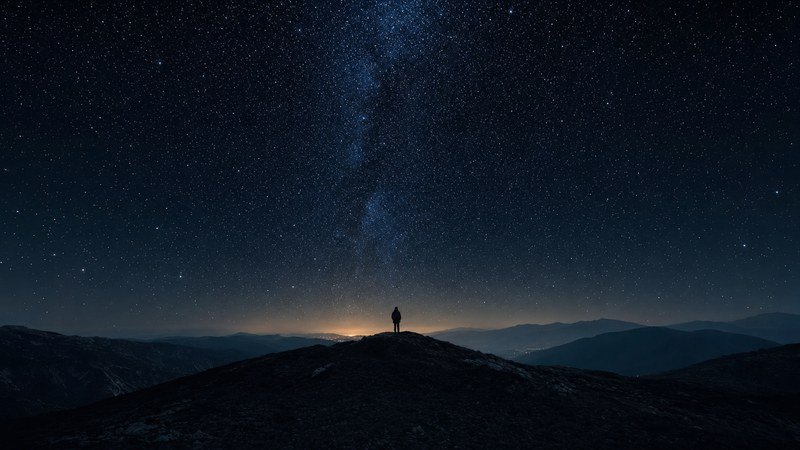
Overnighting and camping are not the same
It's the distinction that decides whether you get a fine, and it's constantly muddled.
Pernoctar is sleeping inside the vehicle without putting anything outside: no awning, no table, no chairs, no stabilising legs. If the car is parked where parking is allowed and takes up no more space than any other car, it counts as parking, not camping.
Acampar is putting anything up outside. A tent, an awning, a chair. That's forbidden outside authorised campsites, and it's forbidden siempre inside a protected natural area — which is exactly where almost all the good places on this list are.
The actual rule is set by each autonomous community and each town council, and inside a nature park the park decides. This is the general rule, not a permit: before sleeping out, check the bylaws of the place you're going to.
What “dark sky” means
It's measured on the Bortle scale, from 1 to 9. In a big city you're at 8 or 9: you can see the Moon, the planets and a handful of stars. The Milky Way starts to appear at 4 and really shows at 3 or below.
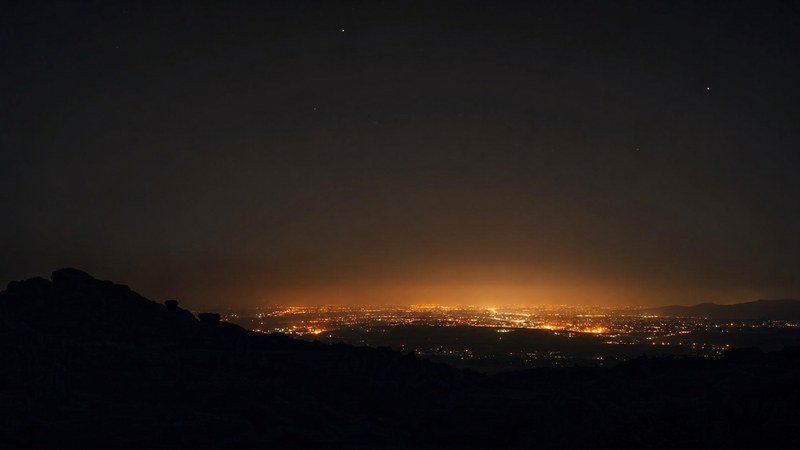
Of the 81 sites on this list, 30 have the measurement published. The rest don't carry it on purpose: nobody has measured there, and an invented number is worse than a gap.
The places, with their coordinates
Each one links to its exact point on the map. None is placed by eye: they come from public documents linked at the end.
Córdoba (30)
- Mirador Astronómico de Montes Comunales — Bortle 3, Adamuz 38.1656, -4.5714
- Abrevadero Medieval — Bortle 4, Adamuz 38.0107, -4.5442
- Ermita Nuestra Madre del Sol — Bortle 4, Adamuz 38.0164, -4.4596
- Caseta de Vigilancia contra incendios en Montes — Bortle 3, Adamuz 38.1574, -4.5747
- Molino del Gollizno — Bortle 4, Adamuz 38.0238, -4.5307
- Mirador astronómico de la Ermita de San Benito — Bortle 4, Obejo 38.1354, -4.7829
- Mirador del Cerro de la Coja — Bortle 4, Obejo 38.0024, -4.7637
- Puesto de vigilancia contra incendios — Bortle 4, Obejo 38.1252, -4.7956
- Mirador del cerro de la presa — Bortle 4, Obejo 38.0350, -4.6781
- Llanos de Espiel — Bortle 4, Espiel 38.2029, -5.0096
- Ermita Virgen de la Estrella — Bortle 4, Espiel 38.1595, -5.0175
- Mirador astronómico del albergue de Espiel — Bortle 4, Espiel 38.1769, -5.0469
- Castillo de El Vacar — Bortle 4, Espiel 38.0856, -4.8619
- Mirador astronómico de Hornachuelos — Bortle 4, Hornachuelos 37.8210, -5.2409
- Mirador Huerta del Rey — Bortle 4, Hornachuelos 37.8468, -5.2613
- Monte público Los Ruedos — Bortle 4, Hornachuelos 37.8185, -5.2501
- Sendero del Guadalora — Bortle 4, Hornachuelos 37.8142, -5.2996
- Mirador astronómico Huerta de la Isla — Bortle 5, Montoro 38.0205, -4.3773
- Presa de Martín Gonzalo — Bortle 4, Montoro 38.0933, -4.3405
- Casa de la Loma del Barco — Bortle 4, Montoro 38.0239, -4.4345
- Mirador astronómico del Camping Puente Nuevo — Bortle 4, Villaviciosa de Córdoba 38.0806, -4.9267
- Parque periurbano — Bortle 4, Villaviciosa de Córdoba 38.0722, -5.0449
- La Cepera — Bortle 4, Villaviciosa de Córdoba 38.0570, -5.0203
- Monte Cabeza Aguda – Poblado Collado de los Lobos — Bortle 3, Villaviciosa de Córdoba 38.0219, -5.1413
- Mirador astronómico de las Zahurdillas Altas — Bortle 4, Villaharta 38.1382, -4.9066
- Merendero de las Serranas — Bortle 4, Villaharta 38.1494, -4.9087
- Campo de fútbol y helipuerto — Bortle 4, Villaharta 38.1361, -4.8981
- Merendero público de la Nava — Bortle 4, Villaharta 38.1287, -4.9040
- Mirador astronómico de la Dehesa Boyal — Bortle 4, Villanueva del Rey 38.2118, -5.1510
- Vértice de Las Erillas — Bortle 3, Villanueva del Rey 38.1330, -5.2217
Segovia (5)
- Estelarium de El Espinar — El Espinar 40.6948, -4.3324
- Mirador Estelar — Riaza 41.2835, -3.3633
- Mirador Estelar en la Cañada (Cabanillas) — Torrecaballeros 40.9686, -4.0036
- Mirador Estelar en la Cañada (Torrecaballeros) — Torrecaballeros 40.9883, -3.9866
- Mirador Estelar en la Cañada (Trescasas) — Trescasas 40.9553, -4.0167
Castellón (4)
- Observatori Astronòmic Astropunt Ermita de Sant Cristòfol — Culla 40.3266, -0.1671
- Observatori Astronòmic Astropunt de Vistabella — Vistabella del Maestrazgo 40.2522, -0.3567
- Observatorio Astronómico Astropunt de Torremiró — Morella 40.6597, -0.0690
- Observatorio Astronómico Astropunt del paraje de Santa Bárbara — Todolella 40.6474, -0.2650
Almería (3)
- Centro Astronómico Hispano en Andalucía — Gérgal 37.2213, -2.5509
- ICAstronomy — Oria 37.5012, -2.4085
- Planetario de Serón-Almería — Serón 37.3518, -2.5199
Granada (3)
- Complejo Astronómico Los Coloraos — Gorafe 37.4864, -3.0382
- Observatorio Astronómico — Granada 37.1614, -3.6048
- Observatorio astronómico de La Sagra — Puebla de Don Fadrique 37.9828, -2.5660
Ourense (3)
- Centro Astronómico de Trevinca — A Veiga 42.2204, -6.9859
- Miradoiro Astronómico "As Tablillas" — Viana do Bolo 42.1726, -6.9438
- Mirador Estelar O Rañadoiro — A Veiga 42.2528, -6.9222
Pontevedra (3)
- Miradoriod Castelo do Faro — Covelo 42.3025, -8.2691
- Observatorio Astronómico de Cotobade — Cerdedo Cotobade 42.4919, -8.4638
- Observatorio Astronómico de Forcarei — Forcarei 42.6106, -8.3709
Santa Cruz de Tenerife (3)
- Observatorio del Roque de los Muchachos — Garafía 28.7574, -17.8868
- Observatorio del Teide — Fasnia 28.3008, -16.5110
- Tacande Observatory — El Paso 28.6421, -17.8677
Sevilla (3)
- Cerro del Hierro — San Nicolás del Puerto 37.9551, -5.6256
- Monte de La Capitana — Guadalcanal 38.1087, -5.8331
- Observatorio Astronómico de Almadén de la Plata — Almadén de la Plata 37.8647, -6.1466
Ávila (2)
- Mirador Estelar de El Bohodón — El Bohodón 40.9184, -4.7390
- Observación astronómico Polaris — Navarredonda de Gredos 40.3637, -5.1420
Cuenca (2)
- Mirador de las Estrellas — Huete 40.1984, -2.5329
- Observatorio de estrellas — Beamud 40.1828, -1.8263
Huelva (2)
- Ermita de San Bartolomé — Alájar 37.8308, -6.6434
- Observatorio estrellas — Higuera de la Sierra 37.8456, -6.4456
Jaén (2)
- Control de La Cabrera — Marmolejo 38.1210, -4.1415
- Observatorio Astronomico de La Fresnedilla — Villacarrillo 38.0609, -2.9444
Teruel (2)
- Observatorio Astrofísico de Javalambre (Pico del Buitre) — Arcos de las Salinas, 1957 m 40.0418, -1.0163
- Mirador de Estrellas de Mosqueruela — Mosqueruela 40.3604, -0.4415
Valencia (2)
- Observatori d'Aras de los Olmos - Universitat de València — Aras de Olmos 39.9453, -1.1014
- Observatorio astronómico — Valencia 39.4795, -0.3646
Badajoz (1)
- Mirador Vegas Bajas — Lobón 38.8534, -6.6797
Cáceres (1)
- Observatorio astronómico de Monfragüe — Torrejón el Rubio 39.7732, -6.0092
Gerona (1)
- Observatori astronòmic Can Roig — Llagostera 41.8267, 2.8963
Guadalajara (1)
- Mirador Astronómico — Alcoroches 40.6172, -1.7526
La Coruña (1)
- Observatorio Astronómico Ramón María Aller — Santiago de Compostela 42.8759, -8.5554
Las Palmas (1)
- Observatorio Astronómico de Temisas — Agüimes 27.8999, -15.5081
Lérida (1)
- Mirador de la Mollera d'Escalarre — la Guingueta d'Àneu 42.5973, 1.1335
Lugo (1)
- Observatorio Astronómico do Monte de Santa Cruz — Ribadeo 43.5273, -7.0623
Navarra (1)
- Mirador Estelar "La Peñica" — Tudela 42.0601, -1.5932
Región de Murcia (1)
- Observatorio Astronómico de Cehegín — Cehegín 38.0948, -1.7767
Salamanca (1)
- Observatorio astronómico "El cielo de Salamanca" — Encina de San Silvestre 41.0199, -6.1008
Tarragona (1)
- Parc Astronòmic Muntanyes de Prades — Prades 41.3087, 0.9878
Spain's 22 Starlight Reserves
A Starlight Reserve isn't a spot: it's a whole district whose sky quality is certified by the Starlight Foundation, endorsed by UNESCO and the International Astronomical Union. Spain has more than any other country.
- Geoparque de Granada — Andalucía, since 06/2026
- Porto-Alta Sanabria — Castilla y León, since 04/2026
- Alto Turia — C. Valenciana y Castilla-La Mancha, since 10/2025
- P. N. Marítimo-Terrestre del Archipiélago de Cabrera — Baleares, since 01/2025
- Sierra Mágina — Andalucía, since 12/2024
- Sierra de Cazorla — Andalucía, since 12/2024
- Sierra de Segura de Jaén — Andalucía, since 12/2024
- Provincia de Soria — Castilla y León, since 09/2023
- Cielos de Guadalajara — Castilla-La Mancha, since 01/2022
- Parque Regional de Gredos — Castilla y León, since 11/2020
- Sierra de Albarracín — Aragón, since 03/2020
- Menorca — Baleares, since 01/2019
- Comarca Cuencas Mineras — Aragón, since 10/2018
- P. N. d'Aigüestortes i Estany de Sant Maurici — Cataluña, since 09/2018
- Los Pedroches — Andalucía, since 12/2016
- Territorio Gúdar-Javalambre — Aragón, since 12/2016
- Fuerteventura — Canarias, since 03/2015
- Sierra Sur de Jaén — Andalucía, since 03/2014
- Sierra Morena Andaluza — Andalucía, since 03/2014
- El Montsec — Cataluña, since 10/2013
- Cumbres de Tenerife — Canarias, since 10/2013
- La Palma — Canarias, since 04/2012
Choosing the night matters as much as choosing the place
A Bortle 3 sky under a full moon looks worse than a Bortle 5 under a new moon. The Moon is by far the biggest source of light in the night sky, and its phase changes every day.
What to look at isn't the phase, but how many hours of full darkness there are without the Moon: from when the Sun drops 18 degrees below the horizon until it starts to get light, minus the time the Moon is up. That number changes every night and at every place, and the app works it out for wherever you choose.
Where these data come from
- Identification of astronomical points of interest in the Sierra Morena of Córdoba — “Cielos de Andalucía” cooperation project
- Viewpoints of the Sierra Morena Starlight Reserve — astronomia.sierramorena.com
- Observatorio Astrofísico de Javalambre — CEFCA
- List of Starlight Reserves — Starlight Foundation
- Viewpoints and observatories from OpenStreetMap — OpenStreetMap, community data
Preguntas
- Can you camp freely in Spain?
- En general no. Acampar —desplegar una tienda o cualquier elemento fuera del vehículo— está prohibido fuera de los campings autorizados, y siempre dentro de espacios naturales protegidos. Dormir dentro del coche sin sacar nada fuera, bien aparcado, es otra cosa: es pernoctar, y no se trata igual. Aun así cada comunidad y cada ayuntamiento tienen su norma.
- What is a Starlight Reserve?
- A certification from the Starlight Foundation, endorsed by UNESCO and the International Astronomical Union, attesting to the quality of a territory's night sky and its commitment to protecting it from light pollution. Spain has 22, more than any other country.
- What is the Bortle scale?
- A scale from 1 to 9 measuring how much artificial light dirties the sky. 1 is a perfect sky and 9 the middle of a city. The Milky Way starts to show at 4 and is seen in detail at 3 or below. In a Spanish capital you'll be at 8 or 9.
- Which is the best night to see the Milky Way?
- One without the Moon. The phase matters more than the place: an excellent sky under a full moon performs worse than a middling one under a new moon. What to check is how many hours of full darkness remain with the Moon below the horizon, which changes every day.
- Do you need a telescope?
- Not for the best of it. The Milky Way, meteor showers, zodiacal light and the constellations are all visible to the naked eye, and in fact look better that way: the eye takes in a huge field that no telescope covers. What you need is darkness and half an hour for your sight to adapt.
Updated on 2026-09-20.